Discover key factors impacting industrial CT scanning costs, including part size, material, tolerances, reporting requirements, and inspection complexity.
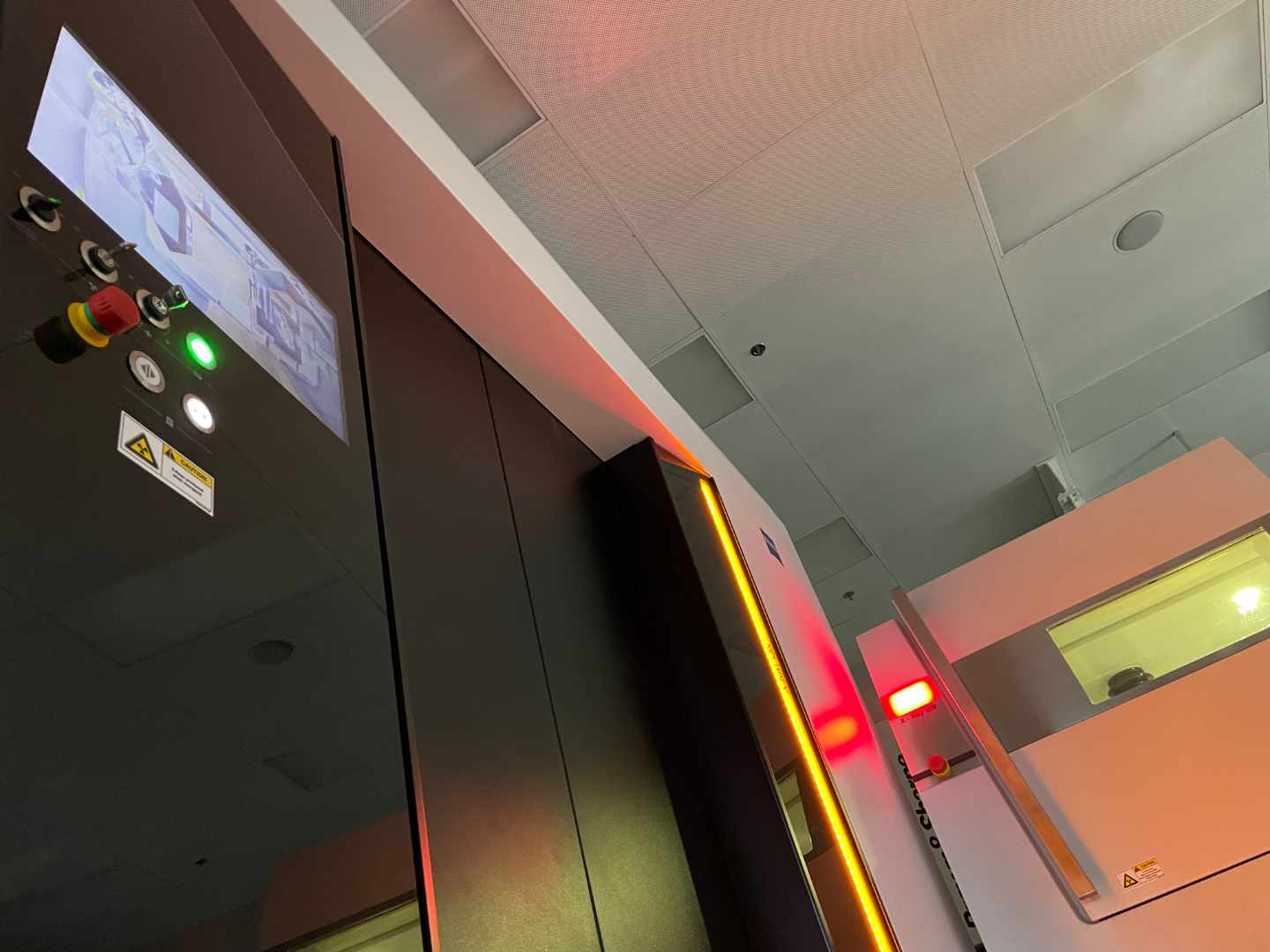
When a customer reaches out for an industrial CT scan, dimensional inspection, or precision metrology quote, one of the first questions is:
“How much does it cost?”
The honest answer is that precision inspection pricing depends on far more than simply placing a part into a machine and pressing start.
In metrology, two projects that may appear nearly identical on the surface can require dramatically different levels of engineering effort, inspection strategy, data processing, reporting, and verification behind the scenes. The real cost of precision inspection is tied to the complexity of obtaining reliable, repeatable, decision-ready data.
As Operations Manager at Nel PreTech, I see this every day. It’s my job to assess the planning and provide a technical evaluation before a scan or inspection even begins. No matter the method, whether it be industrial CT scanning, blue light scanning, CMM inspection, or a combination of technologies, the quote reflects the engineering requirements necessary to produce meaningful data.
Here are some of the biggest factors that influence the cost of industrial CT scanning and precision inspection services.
One of the first considerations in any inspection project is the physical nature of the component itself.
A small plastic injection-molded part and a large dense metal assembly require completely different inspection strategies. Material density directly affects scan energy requirements, penetration capability, image clarity, and achievable resolution during industrial CT scanning.
For example:
These variables influence not only machine runtime, but also reconstruction complexity and downstream analysis.
Not all inspection projects require the same level of precision.
A general visualization scan for internal inspection is very different from a metrology-grade dimensional inspection intended for aerospace, automotive, or medical manufacturing validation.
As tolerance requirements tighten, the inspection process becomes more demanding:
In precision metrology, achieving reliable micron-level measurements is not simply about equipment capability. It also depends heavily on inspection methodology and operator expertise.
Inspection complexity increases significantly as the number of measured features grows.
A basic dimensional verification involving a handful of features is substantially different from a full first article inspection with hundreds of GD&T callouts and feature relationships.
Each measured element may require:
Comprehensive inspection reports often involve far more engineering analysis than customers initially realize.
The final deliverable plays a major role in determining project scope.
Some customers require:
The more advanced the reporting requirements become, the more engineering time is required for analysis, validation, and quality review.
For regulated industries, documentation requirements alone can significantly increase project complexity.
Resolution is one of the most misunderstood aspects of industrial CT scanning.
Higher resolution scans provide greater detail, but they also require:
Capturing a large casting for general defect detection is entirely different from scanning a miniature medical device component to identify extremely small internal features or material inconsistencies.
Higher resolution does not simply mean “better.” It means more technically demanding.
Part quantity directly impacts inspection planning and execution.
A single prototype inspection may involve extensive setup and engineering evaluation concentrated on a single component. Production validation projects involving multiple samples often require repeatability studies, fixture consistency, batch organization, and standardized reporting structures.
In some cases, inspecting additional parts can improve efficiency. In others, especially when individual analysis is required for every component, workload scales rapidly.
The inspection strategy changes depending on the production stage and customer objectives.
Expedited projects can substantially affect inspection scheduling and operational planning.
Rush turnaround requests may require:
Fast turnaround is achievable, but it often requires additional coordination across operations and engineering teams.
One of the most important parts of quoting is determining which technology is best suited for the application.
Not every project requires industrial CT scanning. In some cases:
The challenge is not simply running equipment. The challenge is selecting the correct methodology for the manufacturing problem at hand.
This is where engineering experience becomes critical.
Modern metrology equipment is extremely advanced, but inspection accuracy still depends heavily on the people operating the technology.
At Nel PreTech, every project involves engineering judgment:
The inspection process is not automated decision-making. It is a technical discipline built on experience, process control, and problem-solving.
The difference between useful data and misleading data often comes down to the expertise behind the inspection plan.
One of the biggest misconceptions in metrology is that all inspection providers deliver equivalent results if they own similar equipment.
In reality, equipment is only part of the equation.
Reliable precision inspection depends on:
A low-cost inspection that produces incomplete or worse, unreliable data can ultimately become much more expensive downstream.
The more information available upfront will result in a more accurately scoped inspection project.
Helpful information includes:
Providing this information early helps streamline the quoting process and aligns the inspection strategy with project goals.
Precision inspection pricing is not simply determined by machine time. It is ultimately driven by engineering complexity.
Every component presents unique challenges involving geometry, material behavior, tolerancing, reporting requirements, and manufacturing intent. The quote will reflect the work required to generate reliable data that customers can confidently use for validation, compliance, or decisions.
At Nel PreTech, the goal is not simply to produce scans or measurements. The goal is to provide traceable inspection data to help customers solve their manufacturing problems, improve quality, or reduce risk.
That process begins in the quoting phase and is carried through to the inspection and deliverables.
Contact me if you’d like to discuss the scope of your scanning project.

Greg Nelson is the Operations Manager and co-owner of Nel PreTech Corporation, with 30+ years of experience supporting precision metrology and inspection services. He oversees operational workflows for CMM, industrial CT, and blue light 3D scanning while helping maintain the company’s ISO 17025–accredited quality system. Greg brings decades of hands-on leadership to delivering accurate, reliable inspection results across regulated industries.


You'll find all the detailed service information you need in one brochure.
Download Brochure
Get a quote within 24-hours and keep your project on schedule.
Get a Quote
Our Nel PreTech engineers are ready to get started on your product challenges.
Ask an Engineer
Download the ultimate CT Scanning Buyer's Guide to improve understanding, time, and efficiency in your scanning needs. Over 50 Pages of useful data and case studies.
Download Now