
+
WEBINAR: Unlock the Power of Industrial CT Scanning
See Deeper. Solve Faster. Spend Smarter.
A 1/2 Hour That Could Reshape Your Inspection Strategy
Date: Wed June 18, 2025
Time: 11am Central Time
Location: Live Online Webinar
See Deeper. Solve Faster. Spend Smarter.
A 1/2 Hour That Could Reshape Your Inspection Strategy
Date: Wed June 18, 2025
Time: 11am Central Time
Location: Live Online Webinar
See Deeper. Solve Faster. Spend Smarter.
A 1/2 Hour That Could Reshape Your Inspection Strategy
Date: Wed June 18, 2025
Time: 11am Central Time
Location: Live Online Webinar
Learn why dimensional accuracy and ISO 7886-1 alignment are critical in syringes & drug delivery product manufacturing.
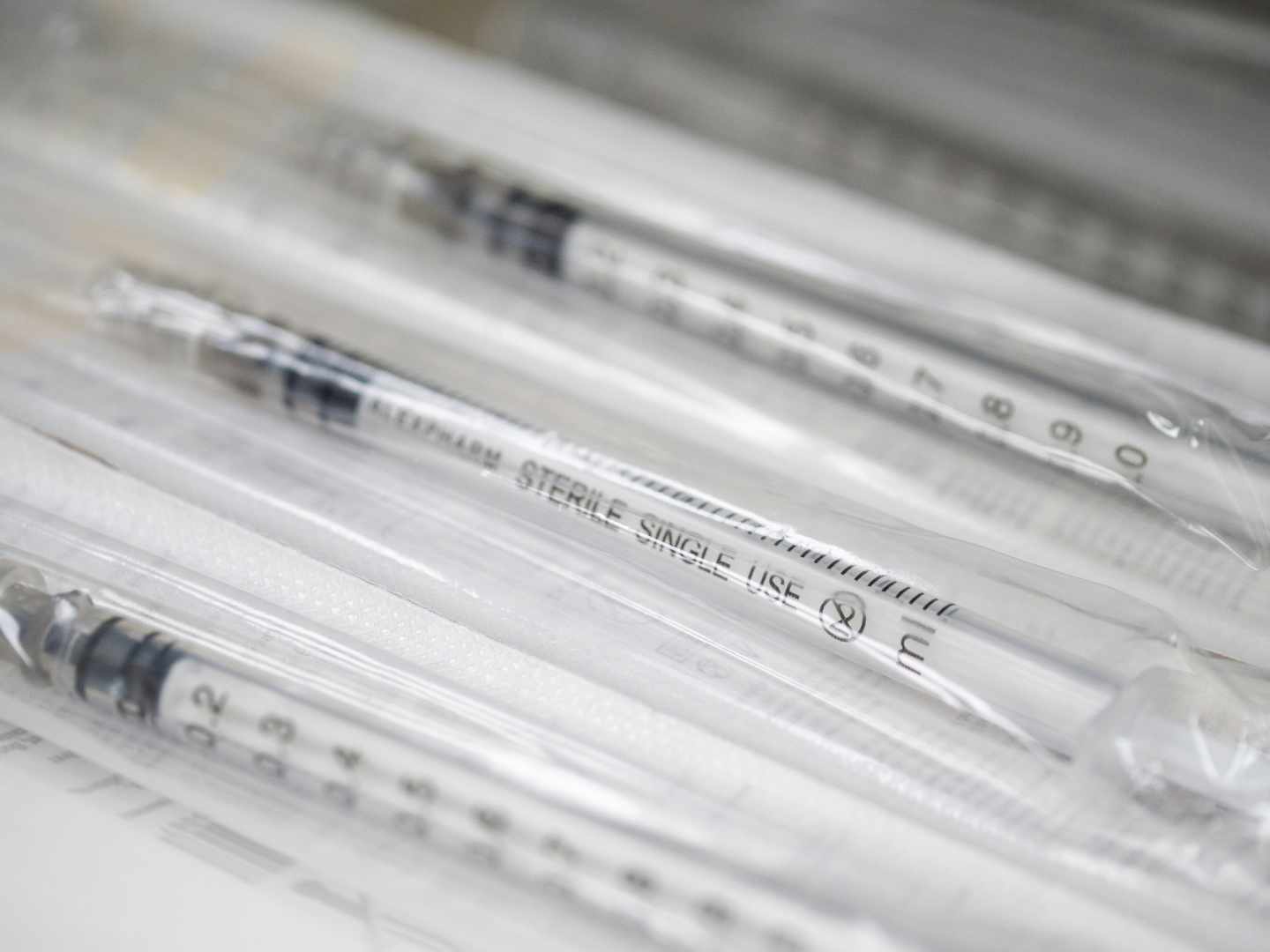
In medical device manufacturing, dimensional accuracy is a foundational requirement. For syringes & drug delivery products, dimensional consistency is directly related to manufacturability, assembly reliability, inspection repeatability, and regulatory compliance. Even the slightest deviation in dimensions could risk production, validation, or audit review.
Consequently, dimensional inspection has become a key element of quality systems for disposable syringes and other drug delivery components. Standards such as ISO 7886-1 define the dimensional and performance-based measurement requirements that manufacturers should use in the design, manufacturing, and inspection of these devices. The inspection process should ensure objectivity in verifying conformance, and not interpretation or replacement of the required standard.
Syringes & drug delivery products are high-volume, precision-manufactured medical devices. The components are regularly moulded from polymers and assembled at scale. Their geometry must be constant across production batches to satisfy specification and regulatory criteria.
From a manufacturing perspective, dimensional accuracy supports:
Dimensional non-conformance may result in rejected lots, delayed approvals, corrective measures, or regulatory inspections. This is why inspection programs are tailored to ensure critical dimensions do not exceed established tolerances throughout the product’s lifecycle.
ISO 7886-1 spells out the dimensional checks for single-use hypodermic syringes used across the globe. If you’re in manufacturing or quality control, this standard shows you precisely which dimensions and tolerances are important.
ISO 7886-1 doesn’t replace your whole quality system. Your team will use this standard as a guide, making sure your checks line up with the design specs and what the regulators expect.
For manufacturers, following ISO 7886-1 keeps things running smoothly—tooling, molding, inspections, process validation, the whole lot. It matters when you’re producing syringes at scale.
Dimensional deviations in syringes and drug delivery components can create downstream risks that extend beyond the production floor. From a quality and compliance perspective, these risks include:
Because syringes are often produced at scale, even small dimensional shifts can affect thousands of units before detection. This makes early and repeatable dimensional verification essential.
Although inspection plans can differ depending on the design and manufacturer, some dimensions are typically tested on syringes and drug delivery products. These attributes are measured to check compliance with specifications and the reference standards.
Barrel Geometry
Internal and external diameters, roundness, straightness, and length are typically inspected to verify consistency and assembly compatibility.
Tip and Connection Dimensions
Critical interface dimensions, such as tip geometry, are to be inspected to ensure compatibility with mating components and compliance with applicable standards.
Wall Thickness Distribution
Uniform wall thickness supports structural consistency and manufacturing repeatability. Inspection verifies thickness across multiple locations, including areas not accessible to traditional contact tools.
Overall Length and Feature Location
Dimensional relationships between features are inspected to confirm proper alignment, tooling accuracy, and process stability.
These inspections focus on geometry and dimensional integrity, not clinical function or use.
Dimensional inspection of medical equipment goes beyond measurement; it needs traceability, repeatability, and documentation. Metrology systems used for syringe inspection should be able to handle and solve tight tolerances, creating objective, reproducible data.
3D metrology and non-destructive CT scanning are advanced technologies that enable inspection services to examine external and internal characteristics without ruining or damaging the parts. The techniques are especially useful with transparent materials, small features, or internal geometries that are hard to access.
Equally important is inspection traceability. Documented measurement workflows, calibrated equipment, and retained inspection records support compliance with quality management systems and regulatory audits.
Getting the dimensions right isn’t just a box to check when you’re making syringes or other drug-delivery devices. Sure, standards like ISO 7886-1 tell you how to measure and what to look for, but that’s just the surface. You need a sharp, reliable inspection company that catches every outlier and ensures each part fits the spec consistently.
As your production ramps up and the design tolerances get tighter, your inspection process needs to keep pace. There’s no room for guesswork. You want numbers you can trust—measurements you can trace back, every step of the way. That’s how you spot issues before they snowball, tighten up your quality system, and stay on the regulator’s good side from start to finish.
Enter Nel Pretech. We know industrial CT scanning and dimensional metrology inside out, especially when it comes to medical parts. We give you non-destructive, standards-compliant inspection data prepared by experts in their discipline. We’ll show you a process you can trust, help you build airtight records, and be confident that every device measures up.

Victoria is the Creative Marketing Manager at Nel PreTech Corporation. She takes complex topics, like industrial CT scanning and 3D engineering, and turns them into accessible content for engineers and decision-makers. With a strategic communication background, she's helped Nel PreTech become a go-to partner in precision measurement and digital manufacturing. Off the clock, you’ll probably find her on a snowboard or hunting down the best tacos in town. She's not afraid to carve her own path!


You'll find all the detailed service information you need in one brochure.
Download Brochure
Get a quote within 24-hours and keep your project on schedule.
Get a Quote
Our Nel PreTech engineers are ready to get started on your product challenges.
Ask an Engineer
Download the ultimate CT Scanning Buyer's Guide to improve understanding, time, and efficiency in your scanning needs. Over 50 Pages of useful data and case studies.
Download Now

