Understand how CT scanning supports quality control, compliance, and risk reduction in high-value medical device manufacturing environments
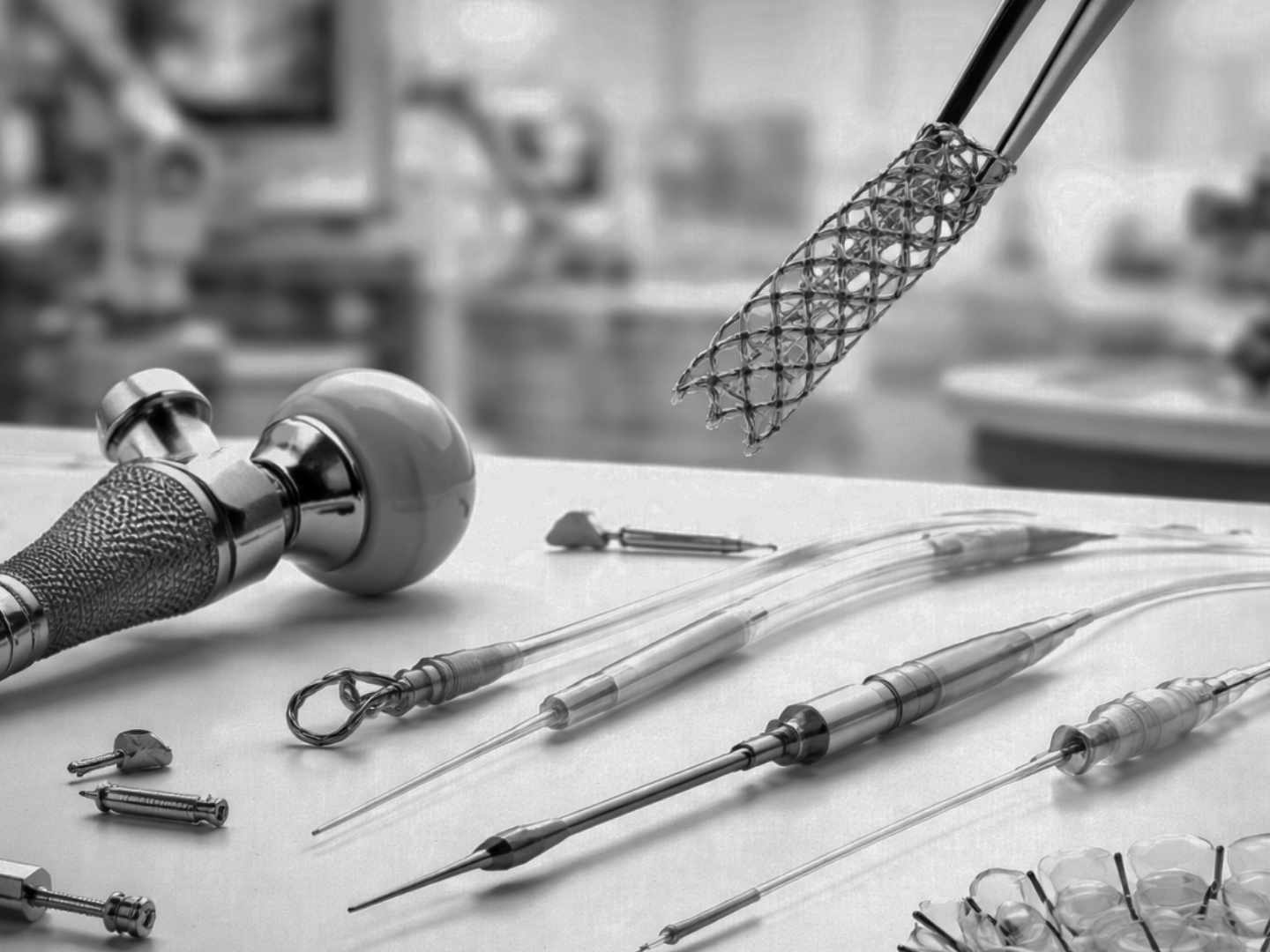
Medical device scanning plays an important role in confirming intricate, high-stakes medical products comply with tight quality and safety rules. As device components increase and standards become more rigorous, inspection methods must live up to the challenge. With expensive medical devices, the margin for error shrinks. Non-destructive testing is an essential tool for checking these parts. Traditional methods of visual inspection and gauges aren’t thorough enough for complete visualization. They simply can’t reveal internal structures or how components are assembled. This limitation has led to more and more manufacturers turning to advanced computed tomography as a go-to approach to medical device scanning and quality control.
Medical device scanning is all about the process of inspection and measurement of manufactured devices. Engineers are confirming their part designs can pass quality tests and meet compliance standards, but how do they do it?
If you work on a controlled production line, then these three concepts are important to you:
All must be met for success. Non-destructive methods are critical here because you need to examine devices without altering their structure or function. CT scanning has become a real game-changer in this area. It offers a detailed, three-dimensional view inside and out. The outcome is a complete digital model without having to take anything apart. This is a big deal for high-value medical devices where you can’t afford to lose parts.
Computed tomography scanning uses X-rays to build a 3D volumetric representation of a device. Unlike surface-based techniques, CT scanning captures cavities inside the device, inner channels, and hidden interfaces, as well as the external geometry. This is all accomplished with one single scan.
This characteristic is very useful for medical devices that include internal features inaccessible to probes or optical systems. By generating a complete digital model, CT scanning allows engineers to evaluate the full geometry of a device without disassembly or sectioning.
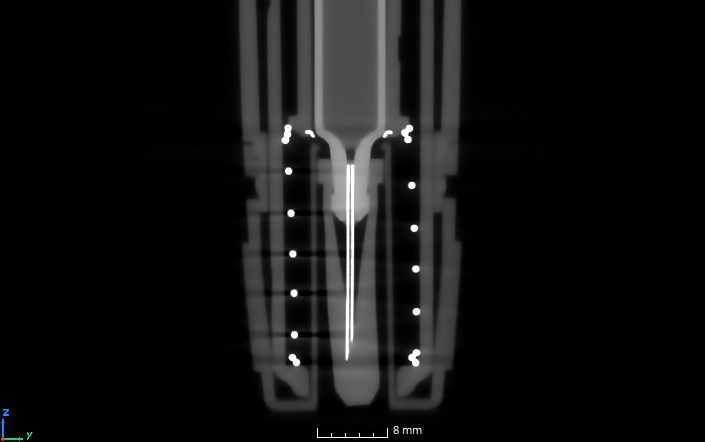
CT scanning stands out because it spots even tiny internal flaws without altering the part at all. You can see air pockets, voids, inclusions, or bonding issues inside a device. There is no need to cut open parts just to risk damage. When hidden defects are caught early, production stays on track. CT scanning gives engineers a sharp look inside. It lets them single out the problem and carry out fixes promptly.
Precision isn’t optional with medical devices. Components need to fit together perfectly. There’s no room for error. CT scanning plays a key role here—it allows you to verify those measurements by comparing scan data with the original CAD models. You can check that the parts align exactly as intended.
Wall-thickness analysis is another key application. In molded or additively manufactured medical devices, consistent wall thickness is needed for structural performance and manufacturability. CT scanning in combination with specialized evaluation software can analyze wall thickness in areas where traditional tools can’t reach.
Most high-value medical equipment is made up of several assembled components. Proper alignment, fit, and engagement of these assemblies may not be easy to check unless disassembled.
CT scanning allows complete assembly inspection without separating components. Internal interfaces, press fits, and alignment conditions can be examined while assembled. It supports confidence in build quality and assembly integrity.
With high-value medical devices, regulatory compliance and financial impacts are always being assessed. Missing quality regulations late in the game may lead to costly fixes, delays, or downtime. Catching issues in the early stages of production will give you a leg up.
Start with CT scanning right from the beginning:
When manufacturers are given solid inspection data, they can make smart calls. They can be confident that their decisions have been made based on a clear and repeatable process.
Medical device manufacturing requires detailed documentation, traceability, and validation of inspection work. CT scanning supports these requirements by producing digital inspection reports that can be stored and referenced throughout the product lifecycle.
Since CT inspection is repeatable and non-destructive, it is easily incorporated into validation and verification processes. The consistency assists in the long-term compliance and quality assurance in the regulated settings of manufacturing.
CT scanning is not intended to replace all inspection methods. It can be used strategically. When applied within controlled and validated processes, it provides reliable insight into internal structure, geometry, and assembly conditions.
At Nel Pretech, CT scanning is applied within disciplined inspection workflows that support quality control, traceability, and compliance for complex manufactured components. For high-value medical devices, this approach strengthens quality assurance processes, reduces inspection risk, and supports consistent manufacturing outcomes.
Need an accredited inspection on your high-value parts? Contact the Nel PreTech team for a free, no-obligation quote.

Victoria is the Creative Marketing Manager at Nel PreTech Corporation. She takes complex topics, like industrial CT scanning and 3D engineering, and turns them into accessible content for engineers and decision-makers. With a strategic communication background, she's helped Nel PreTech become a go-to partner in precision measurement and digital manufacturing. Off the clock, you’ll probably find her on a snowboard or hunting down the best tacos in town. She's not afraid to carve her own path!


You'll find all the detailed service information you need in one brochure.
Download Brochure
Get a quote within 24-hours and keep your project on schedule.
Get a Quote
Our Nel PreTech engineers are ready to get started on your product challenges.
Ask an Engineer
Download the ultimate CT Scanning Buyer's Guide to improve understanding, time, and efficiency in your scanning needs. Over 50 Pages of useful data and case studies.
Download Now