Read how CT scanning and additive manufacturing workflows improve defect detection, porosity analysis, and 3D printing process optimization.
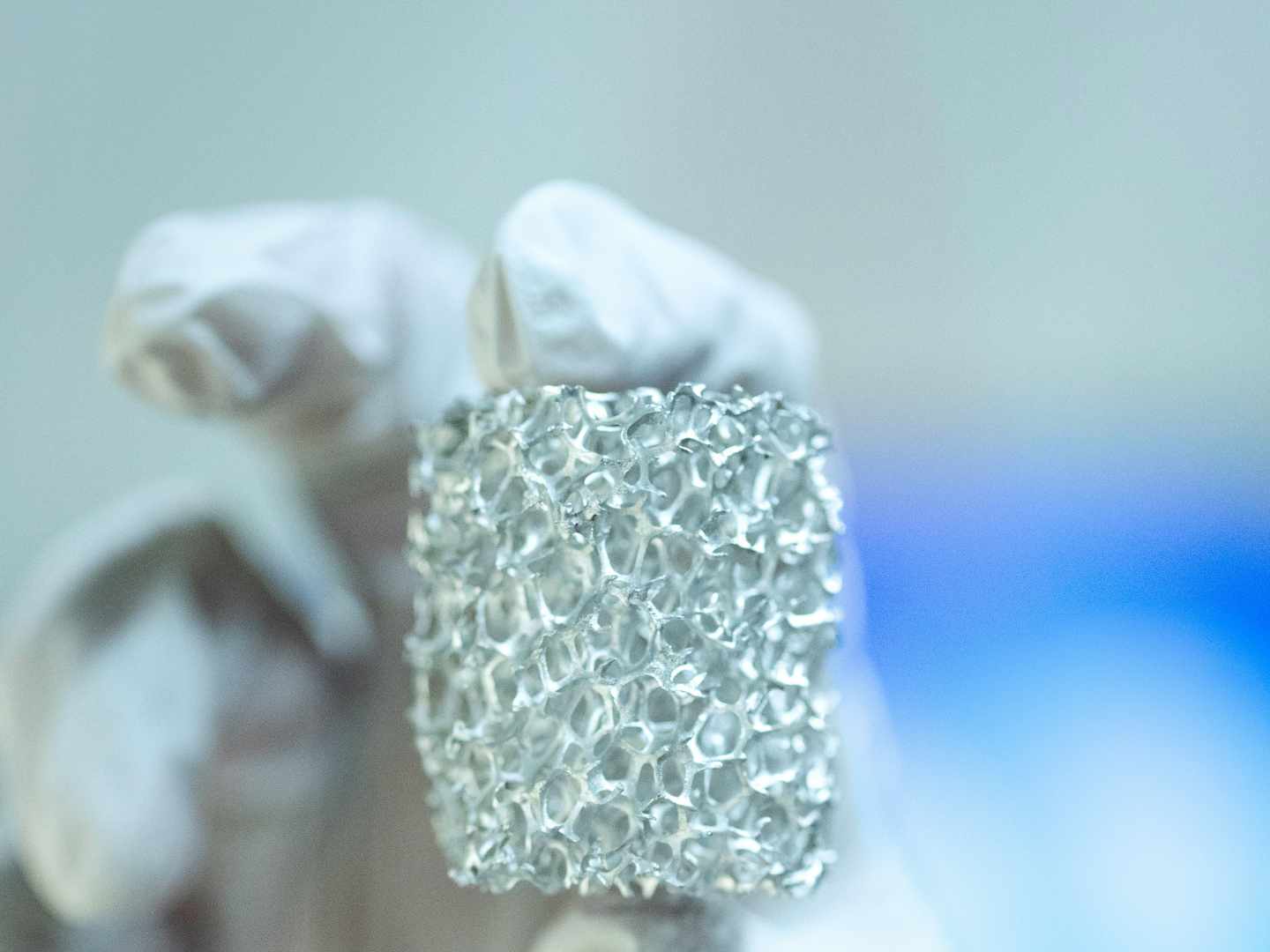
Metal additive manufacturing has reached a point where many engineering teams are no longer asking whether parts can be printed. The question becomes, can they produce the same part repeatedly with stable quality and dimensional behavior?
Most additive manufacturing engineers have seen it happen: the build's critical dimensions check out, and the part clears visual inspection. Then, fatigue testing, machining, pressure testing, or final qualification exposes weaknesses buried inside an otherwise acceptable-looking part.
That is part of the reality of metal 3D printing production.
Minor shifts in laser energy density, hatch overlap, powder spreading consistency, shielding gas flow, or thermal accumulation can alter melt pool behavior. The result may be porosity, lack-of-fusion defects, dimensional distortion, or localized structural weaknesses.
The difficult part is not simply finding defects. It is understanding whether those defects are isolated anomalies or symptoms of repeatable process instability tied to machine parameters, scan strategy, orientation, or thermal behavior.
This is why industrial CT scanning for 3d printing is becoming increasingly important within additive manufacturing quality systems.
Rather than serving only as a final inspection tool, industrial CT scanning allows manufacturers to connect internal defect data directly to additive manufacturing process parameters and build conditions. Volumetric inspection data can help engineering teams identify recurring defect patterns, validate process adjustments, refine scan strategies, and improve long-term production repeatability without destroying expensive prototype or production components.
As additive manufacturing continues moving toward production-scale applications, CT-driven feedback loops are becoming an increasingly valuable part of process validation, dimensional verification, and additive manufacturing optimization.
Additive manufacturing introduces inspection challenges that traditional metrology methods were never designed to solve.
Complex internal channels, conformal cooling paths, thin walls, lattice structures, and enclosed geometries often limit the effectiveness of tactile probing or external optical inspection alone. Conventional measurement systems may confirm accessible surfaces while leaving critical internal conditions unverified.
Industrial CT scanning for 3D printing addresses this limitation by generating a complete volumetric dataset of the component, capturing both internal and external geometry in a single-scan workflow.
This enables manufacturers to evaluate:
For additive manufacturing engineers, this level of visibility is increasingly important because many process instabilities originate internally before dimensional drift becomes measurable externally.
One of the greatest advantages of CT scanning additive manufacturing workflows is the ability to analyze how specific process conditions influence defect morphology across production builds.
Rather than identifying only that a defect exists, CT analysis helps engineers understand why the defect formed and whether it is tied to repeatable process behavior.
Porosity analysis 3d printed parts remains one of the most common applications for industrial CT scanning in additive manufacturing.
Different porosity signatures often indicate different process instabilities.
Spherical gas porosity may develop due to trapped shielding gas or excessive laser energy, leading to keyhole instability. Irregular lack-of-fusion voids are more commonly associated with insufficient energy density, incomplete hatch overlap, inconsistent powder spreading, or unstable melt pool behavior.
CT scanning allows engineering teams to evaluate:
This distinction matters because random isolated pores and systematic lack-of-fusion defects carry very different structural implications.
In production environments, recurring defect concentrations in identical regions across multiple builds frequently indicate parameter-driven instability rather than isolated anomalies.
Lack-of-fusion defects remain among the most concerning structural conditions in metal additive manufacturing because they can create sharp-edged discontinuities that behave as stress concentrators under cyclic loading conditions.
These defects commonly originate from:
Industrial CT scanning enables these discontinuities to be identified non-destructively while preserving expensive prototype and production components for additional validation testing if required.
Cross-sectional reconstruction also allows engineers to evaluate whether defect propagation follows repeatable layerwise patterns, which may indicate recoater interference, thermal imbalance, or localized scan strategy instability.
Thermal accumulation during the build process can introduce residual stress that contributes to warping, geometric drift, or anisotropic shrinkage.
In many metal additive manufacturing applications, distortion becomes increasingly pronounced near unsupported overhangs, support transition zones, and regions experiencing concentrated thermal gradients.
CT-based dimensional inspection services allow manufacturers to compare as-built geometry directly against nominal CAD data while simultaneously evaluating internal structural conditions.
This full-field dimensional analysis provides significantly more insight than isolated point measurements alone, particularly in components containing complex freeform geometry or enclosed internal features.
In one additive manufacturing validation project, a production metal component repeatedly failed downstream fatigue testing despite passing external dimensional inspection and surface evaluation.
Traditional metrology confirmed that accessible surfaces remained within tolerance. However, destructive sectioning revealed inconsistent internal discontinuities near a transition region between dense geometry and lightweight internal structure.
Industrial CT scanning was introduced to evaluate the full volumetric condition of multiple production builds.
CT analysis identified recurring lack-of-fusion defects concentrated near support transition zones, where localized thermal accumulation altered melt pool stability during the build process. The defect morphology and spatial clustering remained consistent across multiple components, indicating the issue was process-driven rather than random.
By correlating CT scan feedback with machine parameters, engineers adjusted scan strategy sequencing, modified support placement, and refined laser exposure settings within the affected region.
Subsequent builds demonstrated substantially improved internal consistency and reduced defect concentration within the critical fatigue zone.
This type of CT scan feedback loop in an additive manufacturing workflow illustrates why volumetric inspection is becoming increasingly important not only for defect detection but also for process refinement and production stability.
The operational value of industrial CT scanning increases significantly when inspection data becomes integrated into process optimization workflows rather than functioning only as a final inspection checkpoint.
CT-generated datasets provide manufacturers with measurable internal quality information that can be correlated directly with additive manufacturing process parameters.
Laser power, scan speed, hatch spacing, and layer thickness all influence melt pool behavior and consolidation quality.
CT analysis allows engineers to evaluate how these variables affect:
Recurring internal defect patterns often reveal instability that may not be visible through external inspection alone.
By correlating volumetric defect data with machine settings, manufacturers can refine parameter combinations that improve melt pool stability and reduce discontinuity formation.
Thermal accumulation remains one of the primary contributors to distortion and dimensional instability in powder bed fusion systems.
CT feedback helps engineers identify recurring deformation zones associated with:
These insights support optimization of thermal management strategies that improve geometric repeatability across production runs.
Support structures influence both thermal conduction and geometric stability throughout the build process.
CT inspection can help manufacturers evaluate whether support placement is effectively minimizing distortion while maintaining dimensional conformance in critical regions.
This analysis also assists in reducing unnecessary support material, post-processing requirements, and overall material consumption without compromising structural performance.
Scan-to-CAD for 3d printed parts has become an increasingly important workflow in additive manufacturing quality assurance.
CT-generated volumetric datasets can be compared directly against nominal CAD geometry to evaluate both internal and external dimensional conditions simultaneously.
This supports:
Unlike selective point-based measurement systems, CT metrology provides complete volumetric dimensional visibility across the entire component.
This allows manufacturers to identify dimensional trends across multiple builds and evaluate whether process modifications are improving long-term production consistency.
Several highly regulated industries increasingly rely on industrial CT scanning to support additive manufacturing validation and production qualification workflows.
Aerospace manufacturers use CT inspection to evaluate lightweight internal structures, cooling channels, and complex geometries in high-performance components where internal integrity is critical.
Medical device manufacturers use industrial CT scanning to inspect intricate internal features while preserving part integrity for additional qualification testing and validation.
Defense, energy, and industrial tooling manufacturers increasingly use CT metrology and volumetric defect analysis to strengthen repeatability, accelerate root cause investigations, and support production-scale additive manufacturing adoption.
As additive manufacturing continues transitioning from prototyping into serial production environments, inspection workflows capable of validating internal geometry non-destructively are becoming increasingly important to process qualification and long-term manufacturing reliability.
Groups like ASTM International and NIST keep pushing for better standards for additive manufacturing in things like process qualification, repeatability, and production validation.
As more manufacturers ramp up additive production, they need better ways to get reliable internal data - without having to pause production flow or destroy valuable parts.
Industrial CT scanning for 3d printing supports this model by connecting volumetric defect analysis, scan-to-CAD metrology, dimensional validation, and process optimization into a unified, seamless manufacturing strategy.
Contact Nel PreTech Corporation for industrial CT scanning, CT metrology, and advanced dimensional inspection services that support additive manufacturing at every stage, with detailed internal analysis, repeatable measurement data, and non-destructive production validation. For organizations wanting to bolster additive manufacturing consistency or strengthen processes, CT-driven inspection data can provide critical insight into conditions influencing long-term production performance.

Victoria is the Creative Marketing Manager at Nel PreTech Corporation. She takes complex topics, like industrial CT scanning and 3D engineering, and turns them into accessible content for engineers and decision-makers. With a strategic communication background, she's helped Nel PreTech become a go-to partner in precision measurement and digital manufacturing. Off the clock, you’ll probably find her on a snowboard or hunting down the best tacos in town. She's not afraid to carve her own path!


You'll find all the detailed service information you need in one brochure.
Download Brochure
Get a quote within 24-hours and keep your project on schedule.
Get a Quote
Our Nel PreTech engineers are ready to get started on your product challenges.
Ask an Engineer
Download the ultimate CT Scanning Buyer's Guide to improve understanding, time, and efficiency in your scanning needs. Over 50 Pages of useful data and case studies.
Download Now