+
WEBINAR: Unlock the Power of Industrial CT Scanning
See Deeper. Solve Faster. Spend Smarter.
A 1/2 Hour That Could Reshape Your Inspection Strategy
Date: Wed June 18, 2025
Time: 11am Central Time
Location: Live Online Webinar
See Deeper. Solve Faster. Spend Smarter.
A 1/2 Hour That Could Reshape Your Inspection Strategy
Date: Wed June 18, 2025
Time: 11am Central Time
Location: Live Online Webinar
Most battery failures start quietly. Below the cell surface, swelling, overheating, power loss, or a catastrophic breakdown could be lurking. Small voids, electrodes out of alignment, debris, squashed separators, cracked welds, and even early-stage dendrites or uneven electrolyte can live inside. Reliability and performance are threatened long before a battery fails in the real world.
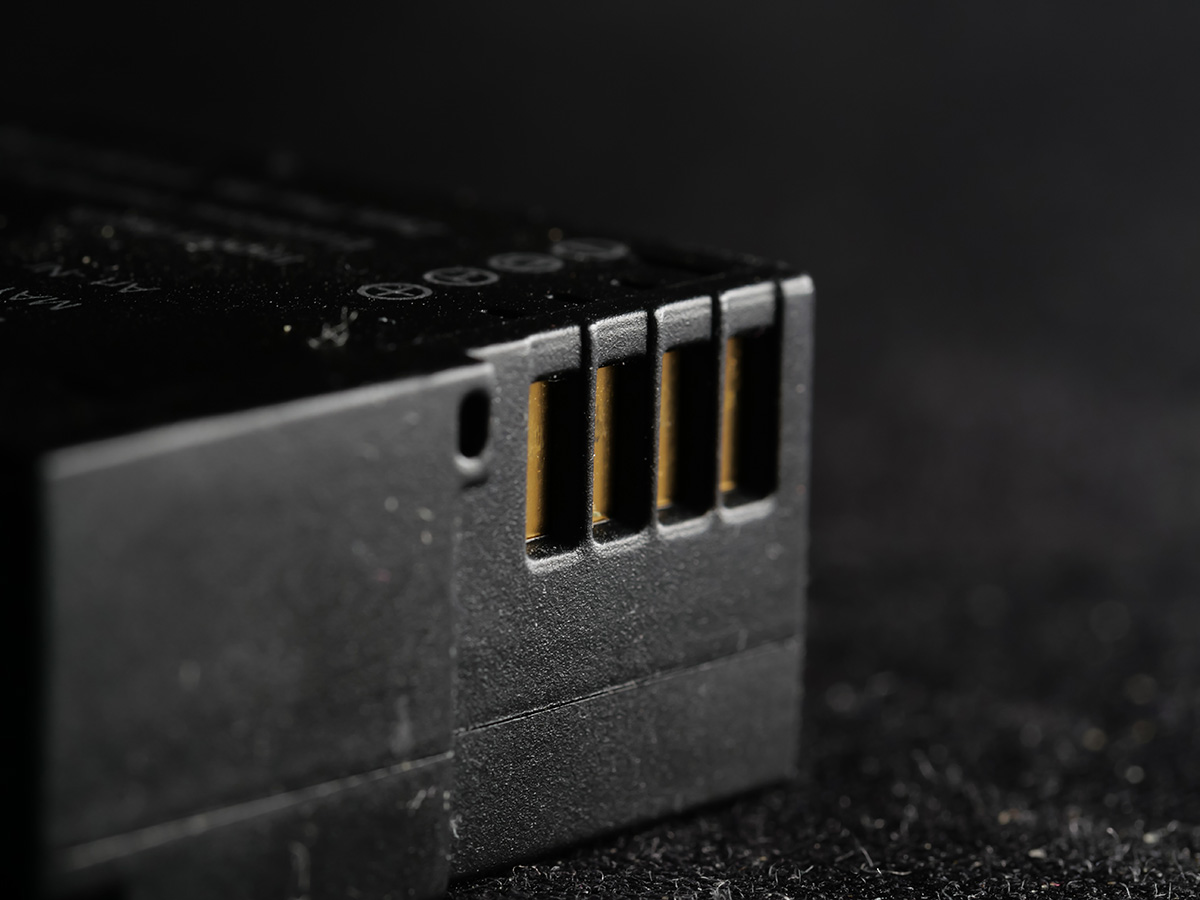
Oddly enough, even with this internal damage, many batteries still manage to pass standard electrical tests. The real story, though, takes more advanced tools to uncover.
Nel PreTech tackles these hidden failures by using industrial CT scanning. In conjunction with top-tier engineering evaluation systems, we spot structural flaws without taking the battery apart. No destructive teardown needed. Our approach works for chemistries like lithium-ion, sodium-ion, and solid-state. Computed tomography is also suitable for hybrid or next-generation battery designs.
Whether you’re building electric vehicle packs, medical implants, or industrial energy storage systems, real insight starts with seeing inside. Engineers and manufacturers need actionable data to produce better designs, fix problems, and push battery performance forward.
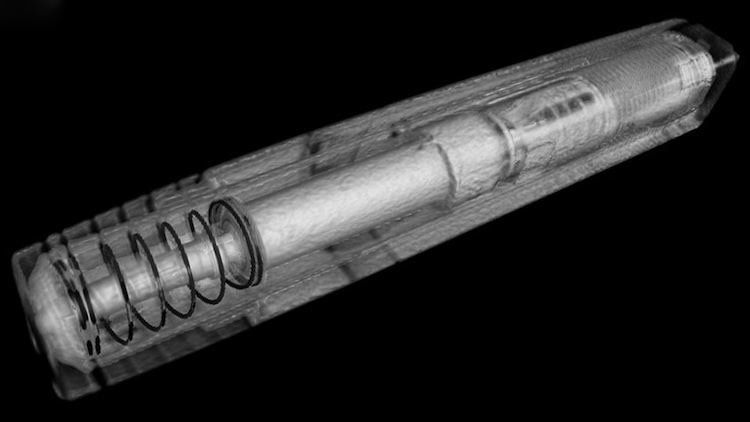
Traditional inspection methods are not sufficient for battery inspections. Surface checks miss the real culprits behind battery failures. Industrial CT scanning changes the game. It captures a true 3D view of everything inside the battery while everything stays intact. Every electrode, layer, and interface can be interrogated.
That matters during failure investigations. Destructive teardown can eliminate critical evidence before engineering teams fully understand what caused the problem. This allows engineers to inspect internal structures layer by layer while preserving the component for additional testing or validation.
Industrial CT scanning systems can evaluate:
Using high-resolution CT scanning, engineers can visualize internal conditions that are otherwise inaccessible through conventional metrology methods.
Many battery-related failures are not caused by a single defect, and therefore, the analysis is not limited to just one category.
Failures develop gradually through manufacturing variation, charging cycles, vibration, thermal stress, material fatigue, environmental exposure, or assembly inconsistencies that compound over time.

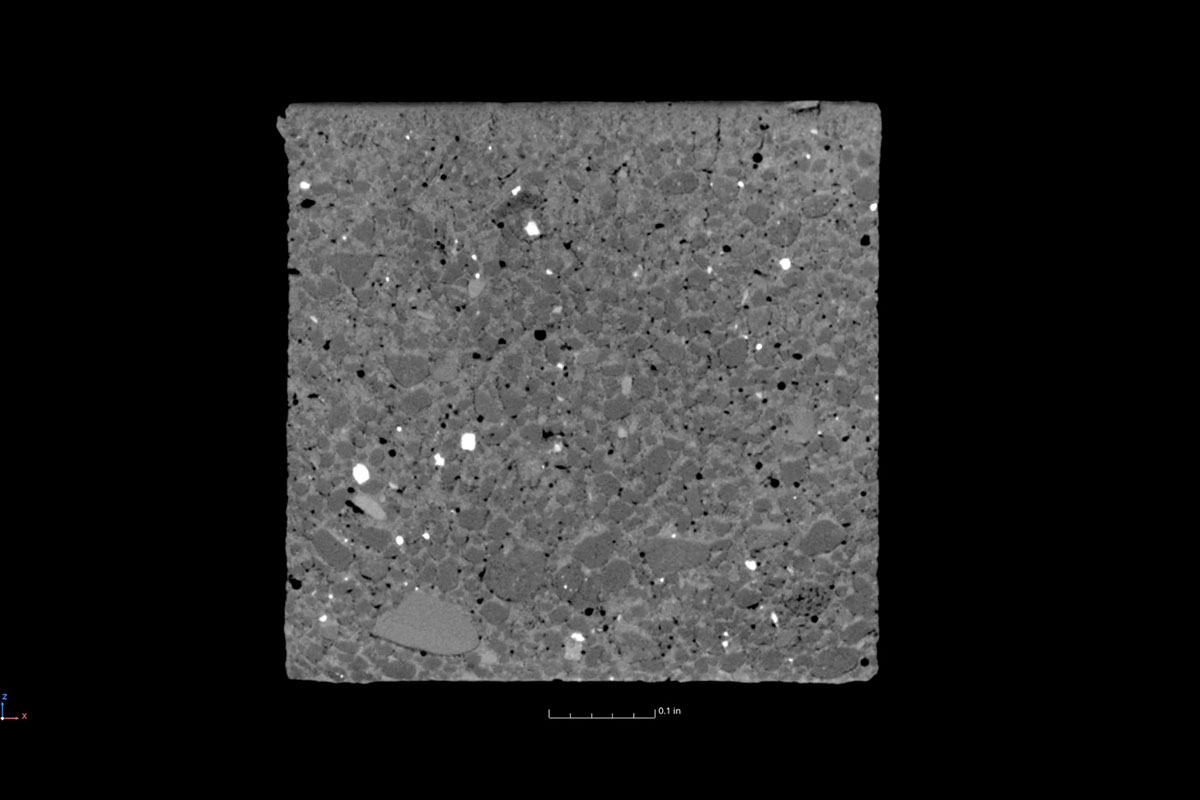
Voids within materials, welds, or interfaces can impact conductivity, heat transfer, and structural integrity. Industrial CT scanning allows engineers to identify and quantify internal porosity without damaging the sample.
Electrode stacking inconsistencies can contribute to uneven current distribution, localized heating, or premature degradation. CT scanning allows precise visualization of layer positioning and alignment throughout the battery structure.
Crushed, folded, punctured, or compromised separators can create unstable internal conditions that increase the risk of short circuits or thermal runaway events.
These defects are often difficult to isolate through conventional inspection methods alone.
Mechanical deformation inside a battery can indicate internal gas generation, thermal stress, material degradation, or manufacturing inconsistencies.
Battery tabs, laser welds, ultrasonic welds, and interconnect structures can be inspected for:
Contamination introduced during manufacturing or assembly can create electrical instability and unpredictable field failures.
Following overheating, venting, or catastrophic failure events, CT scanning can help identify collapse zones, structural deformation, internal displacement, and failure propagation patterns.
For engineering teams investigating field returns or validation failures, preserving internal evidence can be critical.
Nel PreTech supports failure analysis and internal inspection for a wide range of battery chemistries and evolving energy storage technologies.

This includes:
As battery technologies continue evolving toward higher energy density, faster charging cycles, lighter materials, and tighter packaging constraints, internal inspection becomes increasingly important.
Small inconsistencies can create outsized downstream problems once products enter real-world operating conditions.
Establishes

A major consumer product company struggles to develop, approve, and launch multiple high-level cavitation molds for high-volume production & global distribution.
Computed tomography and value-add services from Nel PreTech.
Client saves $1 million in direct cost and gains $60 million in cash flow four months sooner.

Major grill manufacturer reaches out with malfunctioning glow plugs.
Industrial CT scanning (x-ray material testing) provides digital 3D x-ray images of internal components of the glow plug & finds a wire break inside the heating device.
Client is able to investigate the root cause of the glow plug failure and fix the problem.

Global OEM medical device company needs help developing and launching drug delivery pumps.
CT scanning and value-add services create a turnkey solution to give the client a competitive advantage.
20 new tools in 20 weeks.
When battery reliability, safety, or manufacturing consistency is at stake, hidden internal defects can become costly problems.
A defect missed during validation can become a warranty issue, supplier dispute, delayed launch, or field failure later.
Advanced industrial CT scanning and non-destructive battery analysis help manufacturers, engineers, and quality teams identify internal defects earlier, shorten investigation timelines, and make more confident engineering decisions.
Contact Nel PreTech today to discuss your battery analysis project, request a quote, or learn more about our industrial CT scanning capabilities.
Nel PreTech Corporation
Phone: (708) 429-4887
Website: www.nelpretech.com


Download the ultimate CT Scanning Buyer's Guide to improve understanding, time, and efficiency in your scanning needs. Over 50 Pages of useful data and case studies.
Download Now


See Deeper. Solve Faster. Spend Smarter.
A 1/2 Hour That Could Reshape Your Inspection Strategy
Date: Wed June 18, 2025
Time: 11am Central Time
Location: Live Online Webinar