Learn when outsourcing CMM inspection services improves production scalability, reduces bottlenecks, and strengthens dimensional validation workflows.
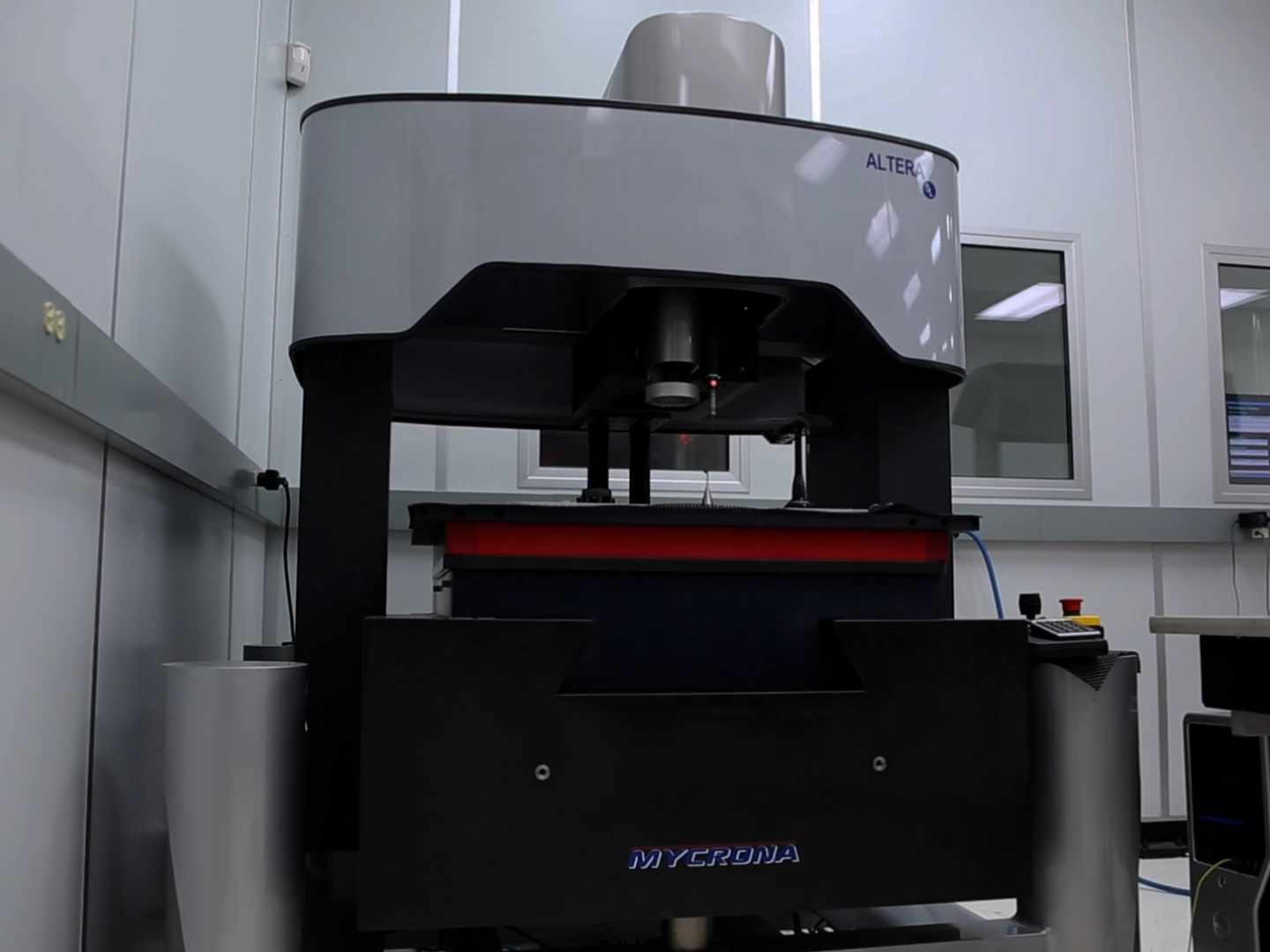
There’s too much at stake these days for manufacturers to shrug off dimensional accuracy. Those geometry tolerances spelled out in ASME Y14.5 (GD&T) and the ISO GPS system need to be verified with traceable data. Coordinate Measuring Machine Inspection can be a key component in achieving compliance, whether you’re building jet engine parts, pacemakers, car components, or defense hardware.
A Coordinate Measuring Machine (CMM) inspection zeros in on your key dimensions, analyzes how features fit together, and confirms geometric tolerances before your parts head to assembly or shipping. It’s a crucial step for First Article Inspection (FAI), PPAP paperwork, and keeping production quality on track.
But when production speeds up, inspection sometimes struggles to keep up. The decision to outsource CMM Inspection Services should not always be considered as cost-based; it can be more about keeping production flowing and capital efficiency.
CMM systems are designed to measure parts in three-dimensional space with high precision.
They are commonly used to verify:
In production environments, CMM inspection ensures parts meet drawing specifications before they are released. When functioning efficiently, internal CMM systems align closely with machining output.
A lot of these challenges arise when inspection demand grows faster than inspection capacity.
Many manufacturers first consider outsourcing Dimensional Inspection Services when measurable strain shows up in their production capabilities. The following bottlenecks signal the need for additional inspection capacity.
When machining centers add shifts or output increases, inspection demand grows proportionally. If only one or two CMM systems are available, inspection queues begin to form.
This can result in:
Inspection should support production flow. When it begins to slow down, capacity must be reevaluated.
CMM systems require calibration, maintenance, and environmental stability. Unexpected downtime can temporarily halt dimensional validation.
In facilities with limited redundancy, this creates risk. Outsourcing CMM Inspection Services can provide backup capacity during downtime without requiring immediate capital investment in additional equipment.
Inspection of an Advanced Coordinate Measuring Machine requires skilled personnel with expertise in GD&T interpretation, datum alignment, and measurement uncertainty.
The staffing level may not rise in proportion to the increase in manufacturing. Although there may be equipment, an inspection throughput may be constrained by a lack of capable programmers.
Outsourcing provides access to trained inspection professionals without expanding internal headcount.
Expanding internal CMM capacity involves more than purchasing equipment. Manufacturers must consider:
For stable, high-volume environments, long-term equipment ownership may make sense. However, for companies experiencing growth spikes, new program launches, or fluctuating demand, outsourcing Dimensional Inspection Services provides flexibility.
Service-based inspection converts fixed capital expense into variable operational cost. This allows capital to remain focused on production equipment, automation, or facility expansion.
Outsourcing CMM Inspection Services makes sense when:
In many cases, outsourcing is not a replacement for internal inspection. It acts as a scalable supplement that stabilizes operations during growth.
In regulated industries, independent Dimensional Inspection Services can also strengthen the credibility of documentation.
Third-party inspection reporting will support:
Traceability, calibration control, and measurement documentation are strengthened when inspection providers operate within a structured laboratory system consistent with ISO/IEC 17025 principles.
We structure our Coordinate Measuring Machine Inspection workflows within disciplined quality frameworks aligned with recognized laboratory standards. As part of ongoing quality system development, NPC undergoes the A2LA accreditation audit process to further formalize traceability, uncertainty evaluation, and laboratory controls.
This structured approach supports defensible dimensional data without expanding beyond the inspection scope.
Manufacturers looking at inspection scalability should consider:
If inspection capacity is stable and predictable, expanding internal systems may align with long-term planning. If growth is uneven or inspection is restricting production velocity, outsourcing CMM Inspection Services may provide operational stability and capital efficiency.
According to ASME Y14.5 and ISO GPS requirements, the dimensional tolerances are to be verified by objective and repeatable data. Inspection infrastructure must not limit production, but rather scale the production.
If your organization is evaluating whether to expand internal metrology capacity or supplement it with external support, get in touch with our expert team at Nel Pretech to discuss how structured CMM Inspection Services can help maintain production flow, protect capital efficiency, and strengthen dimensional validation workflows.

Jason Johnson is a senior technical leader at Nel PreTech Corporation with degrees in Electrical Engineering (UIC) and Computer Science (Governor’s State University). He oversees CMM, Vision, CT, and Blue Light scanning operations and serves as Quality Manager, maintaining ISO 17025 accreditation. With more than two decades at Nel PreTech, Jason brings deep expertise across metrology, quality systems, and technical operations.


You'll find all the detailed service information you need in one brochure.
Download Brochure
Get a quote within 24-hours and keep your project on schedule.
Get a Quote
Our Nel PreTech engineers are ready to get started on your product challenges.
Ask an Engineer
Download the ultimate CT Scanning Buyer's Guide to improve understanding, time, and efficiency in your scanning needs. Over 50 Pages of useful data and case studies.
Download Now