Industrial CT scanning exposed bent anode layers inside a failed lithium battery. Learn about root cause failure analysis.
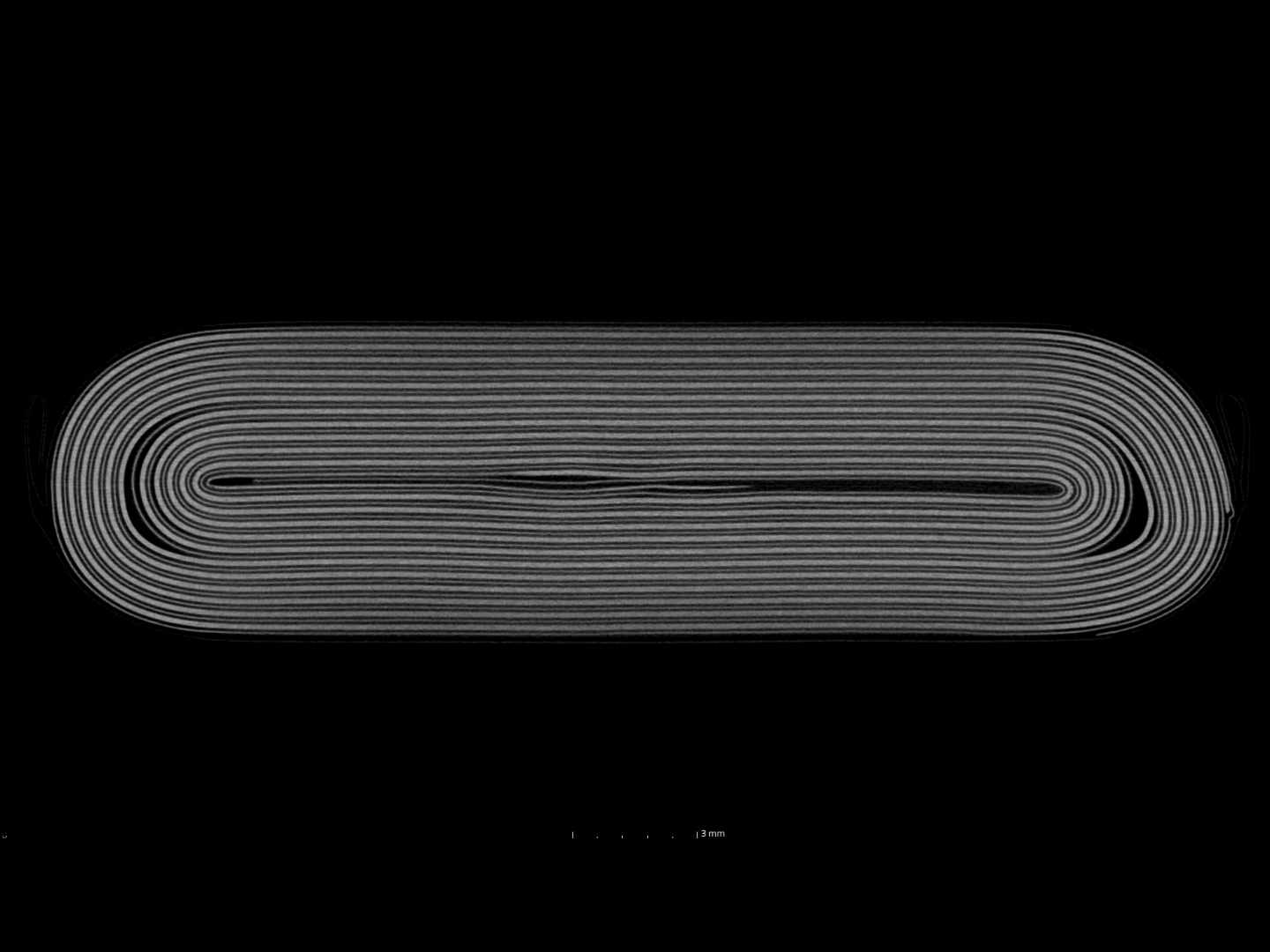
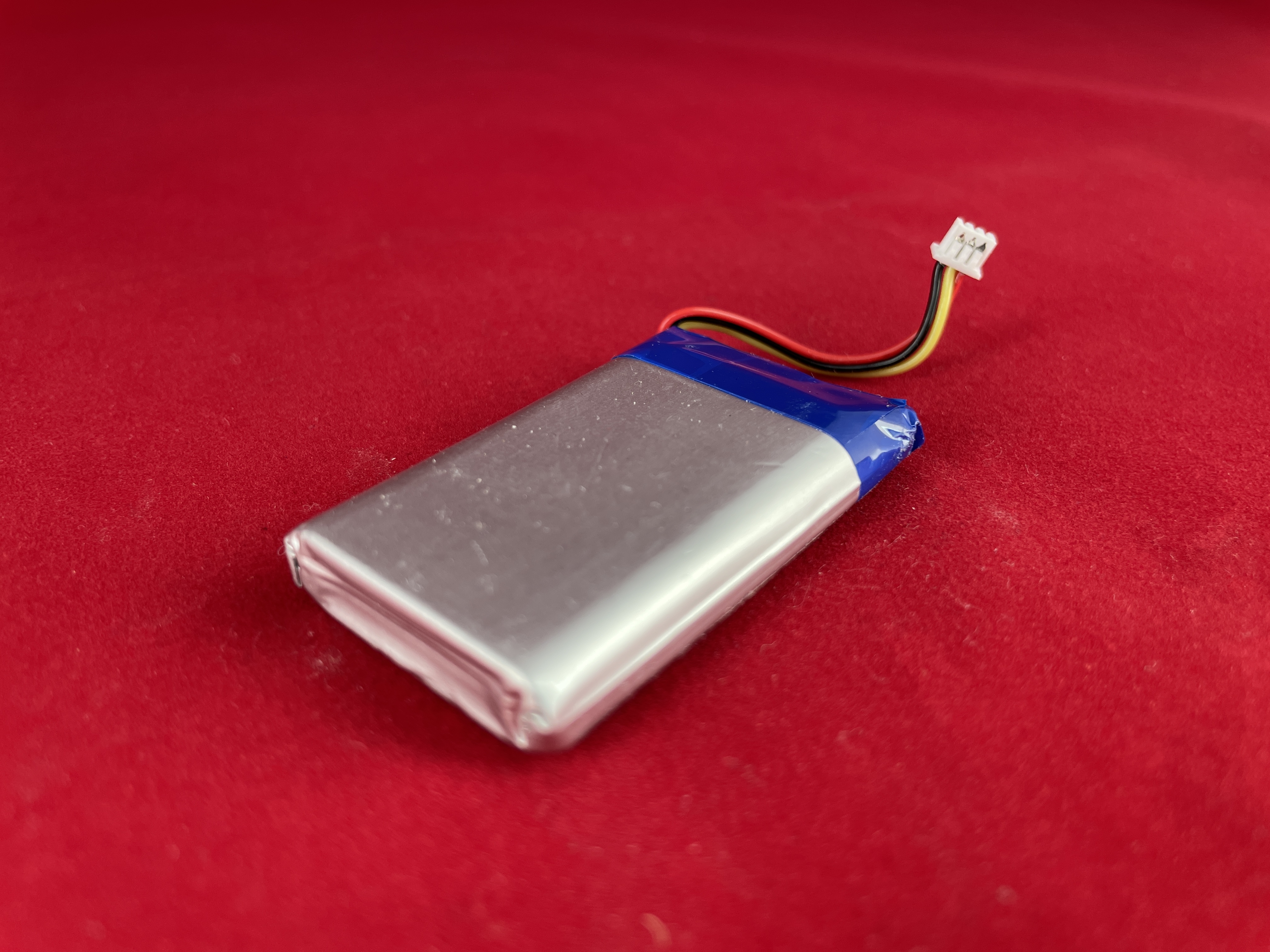
You’d never guess there was a problem just by looking at the lithium battery from this baby monitor. The case was intact. No burn marks, no swelling, no obvious signs of damage. Yet the device just stopped working. For a device meant to run nonstop, that’s a big deal to the manufacturer’s reputation and the end user. When visual inspection or electrical tests don’t tell the whole story, engineers need a reliable way to see beneath the surface. That’s where industrial X-ray CT inspection comes into play.
With non-destructive computed tomography, Nel PreTech examined the battery interior slice by slice, without cutting it open or disturbing any components.
The CT images told the story right away. The anode layers inside weren’t flat or aligned the way they should be. Instead, they were bent and out of place. In a lithium battery, those anodes need to remain flat and evenly spaced for ions to flow properly and efficiently.
When anode layers get folded or warped:
In a baby monitor, or really any consumer electronic, you can end up with the device intermittently cutting out or failing, without any visible warning signs on the outside.
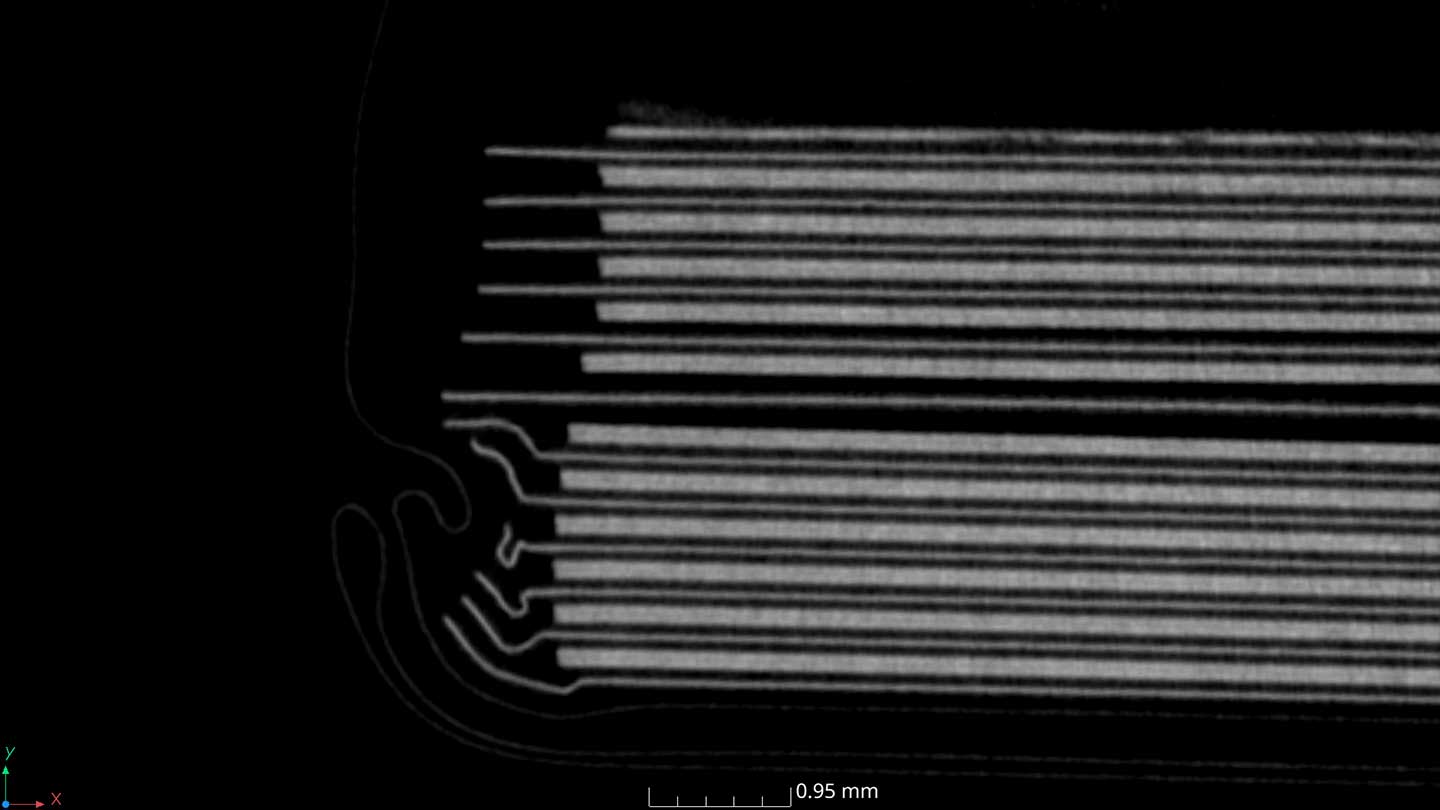
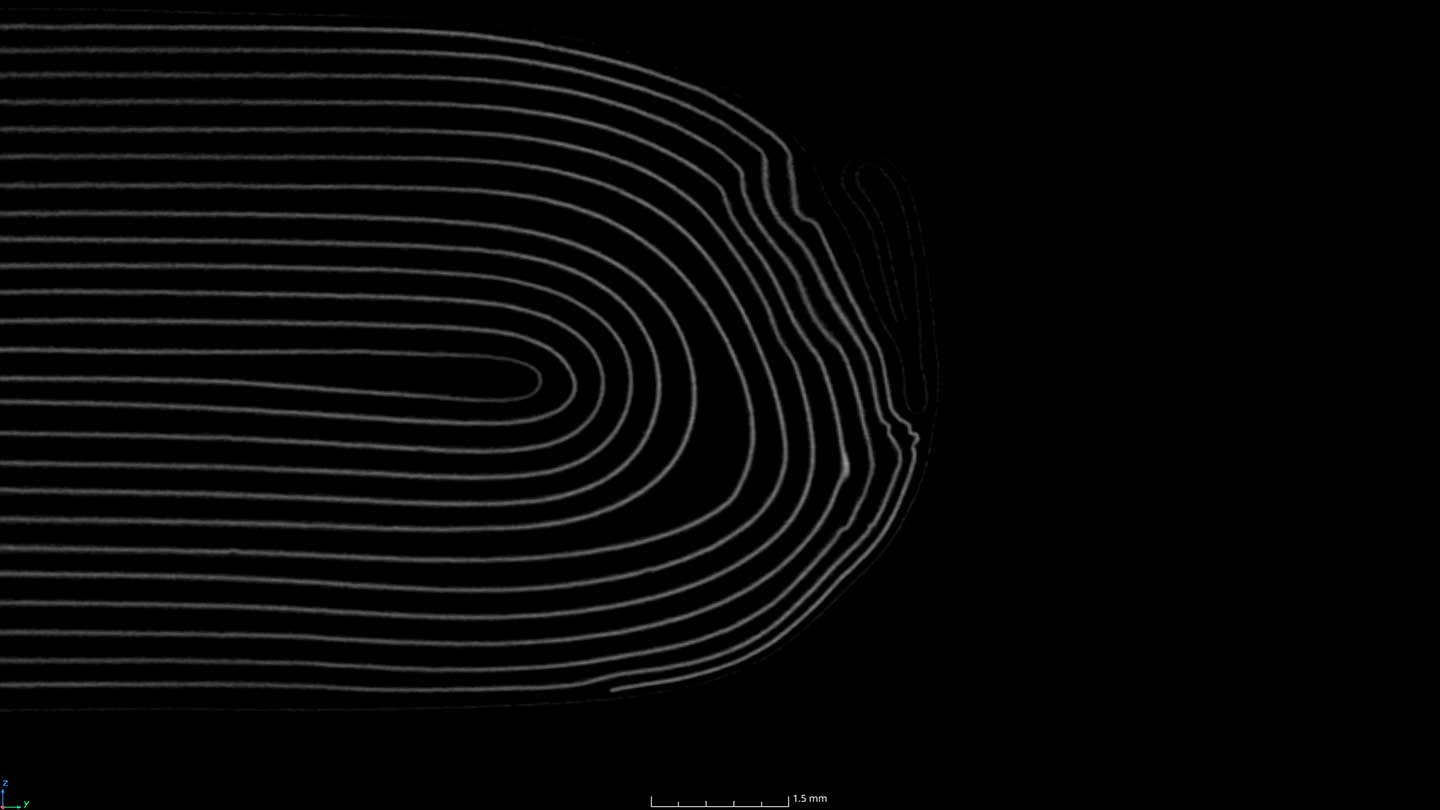
You can’t find this kind of internal damage with the traditional inspection methods. If you cut open the battery, you are only seeing one cross-section. You are likely destroying evidence in the process. Internal components might shift, collapse, or tear. You are only getting part of the picture.
Industrial CT inspection avoids those limitations by delivering:
For lithium batteries, these internal details matter. Internal geometry is critical for safety, longevity, and performance. In lithium-ion batteries like the pouch cell from this baby monitor, the optimal anode overhang (the distance the anode extends past the cathode) is typically 0.500mm. A distance less than that can lead to lithium plating. A distance excessively longer than that can cause the anode to touch the battery casing, which leads to other performance issues. Other important measurements include separator and electrode thickness.
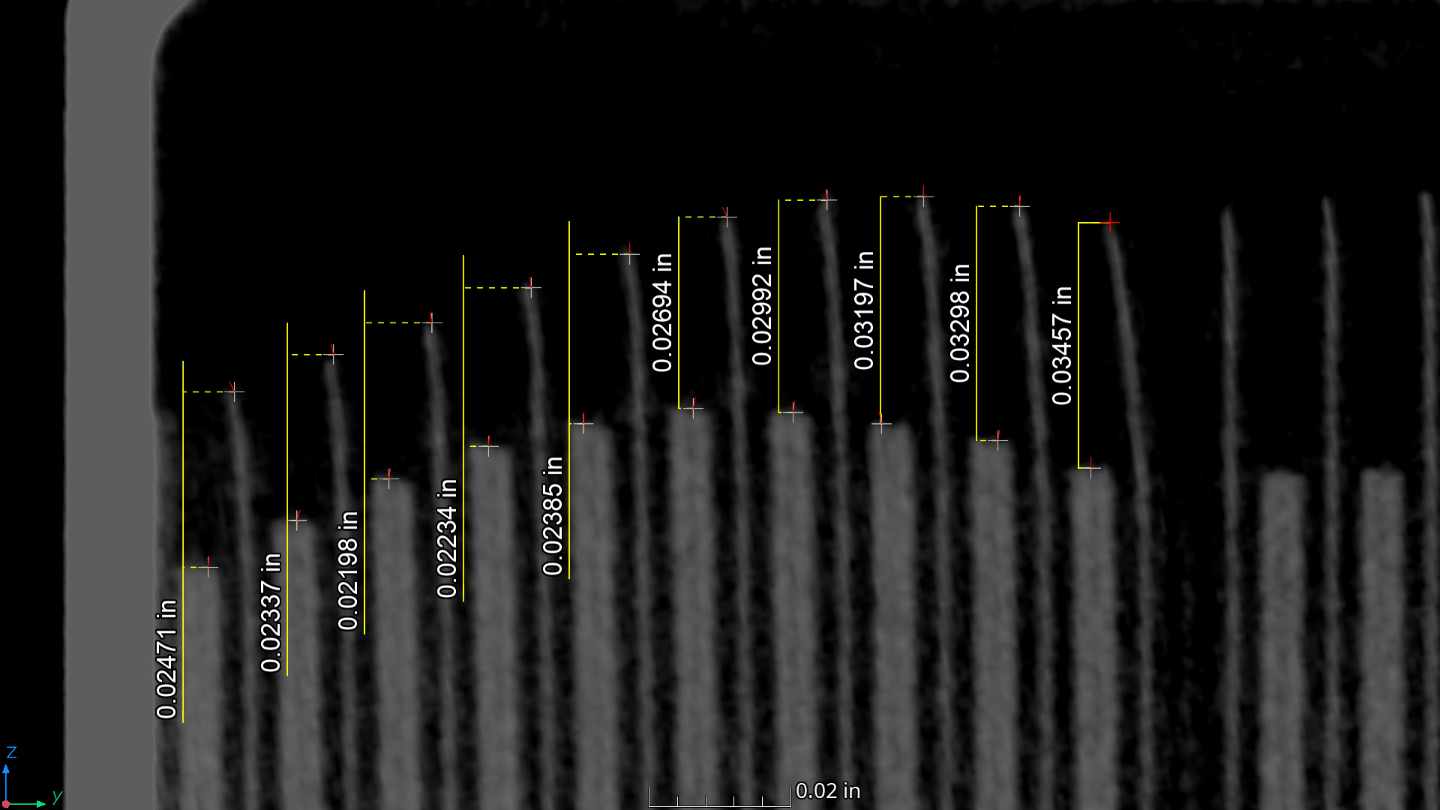
In this case, Nel PreTech found that the bent anode layers likely contributed to electrical instability and eventually battery failure. CT inspection lets the engineers see exactly what went wrong. There’s no guesswork involved, just hard evidence. It bridges the gap between design intent and real-world use. CT scanning can show you how components perform after assembly and manufacturing.
The CT approach helps with:
For anyone building consumer electronics, medical devices, or IoT products, CT scanning offers insights you just can’t get any other way.
At Nel PreTech, we routinely use industrial CT scanning for lithium batteries, wearables, compact electronics, and high-density assemblies. With the right equipment, resolution, and experience, we turn hidden problems into clear, measurable data.
Want to find out what’s happening inside your products? Reach out to our team of experts for a free quote.
.jpg)
Antonio “AJ” Gradi is curious and eager to always learn new information. That dedication to knowledge has catapulted him from Applications Engineer/ CT Specialist to Director of CT at Nel Pretech Corporation. AJ joined the 3D scanning and industrial CT laboratory in July of 2022 and has excelled in every task given.


You'll find all the detailed service information you need in one brochure.
Download Brochure
Get a quote within 24-hours and keep your project on schedule.
Get a Quote
Our Nel PreTech engineers are ready to get started on your product challenges.
Ask an Engineer
Download the ultimate CT Scanning Buyer's Guide to improve understanding, time, and efficiency in your scanning needs. Over 50 Pages of useful data and case studies.
Download Now