Read how reverse engineering enables part replication, tolerance verification, and long-term system reliability of legacy defense equipment.
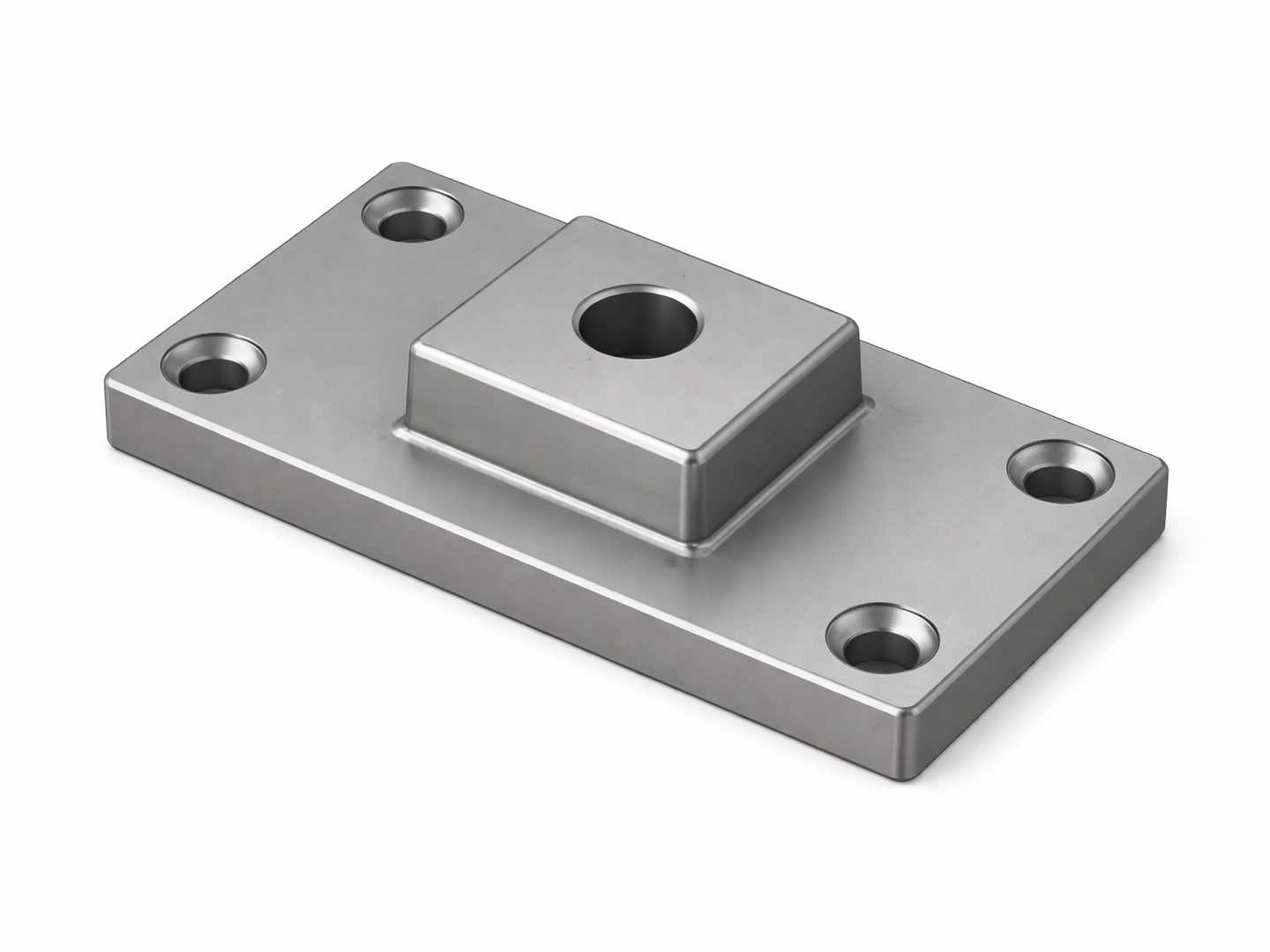
Reverse engineering is essential in defense manufacturing and maintenance, especially when the system is a legacy that remains in service long after its original production lifecycle has ended. Reverse engineering is the organized process of extracting dimensional, material, and functional data of an existing part where it no longer has original design data, tooling, or even supplier support.
Most defense platforms were developed decades ago, and sometimes with service lives even farther than originally predicted. Documentation can become partial over time, suppliers might leave the market, and manufacturing processes might be altered. Reverse engineering is a careful way to understand, document, and recreate essential components while maintaining alignment with regulatory and quality requirements.
Defense systems are designed for long deployment cycles, with some platforms remaining operational for several decades. Full system replacement is often constrained by cost, certification complexity, and operational continuity requirements. As a result, extending the service life of existing equipment becomes a strategic necessity.
Legacy equipment sustainment relies on the ability to maintain, repair, and reliably update old parts. When the original drawings or specifications aren't available, reverse engineering legacy defense equipment allows manufacturers and maintenance organizations to recover essential design information. This supports continuity of supply while reducing dependency on obsolete tooling or unavailable vendors.
In regulated environments, this work must be approached with caution. Any recovered design data must support traceability, repeatability, and compliance with applicable standards, making disciplined engineering processes essential.
Advances in non-contact measurement and digital inspection have significantly improved the reliability of reverse engineering for defense applications. 3D scanning, structured light measurement, and industrial computed tomography are the technologies that help engineers obtain accurate geometric data without changing or ruining the original component.
The techniques allow acquisition of full surface and internal geometry, especially where the part has a complex shape, out-of-sight areas, or wear patterns. The resulting digital models can be used to reconstruct nominal geometry, evaluate dimensional deviations, and validate fit and function within an assembly.
Through the use of non-destructive inspection, the reverse engineering process can proceed without compromising the integrity of limited or irreplaceable components.
Reverse engineering legacy defense equipment supports multiple lifecycle management activities. Recovered geometry can be used to replicate parts when spares are unavailable, verify tolerances against mating components, and rebuild technical documentation needed for long-term support.
In some cases, reverse engineering also enables controlled redesign. Some minor modifications might be necessary to fit updated manufacturing methods or new materials without compromising original form, fit and functionality. These changes should be considered and recorded strictly to maintain adherence to initial performance standards.
Engineering judgment and validation are crucial during this process. Reverse engineering is not just a process of copying a part but it is also the ability to determine the design intent of the original part. This helps to uncover the functional requirements of the part in a wider system context.
Reverse engineering in defense environments presents several technical challenges. Material identification can be complex, particularly when dealing with older alloys or proprietary specifications. Accurate dimensional recovery requires high-resolution measurement and careful data processing to distinguish between original design features and wear or deformation.
Dimensional accuracy is especially important when components interface with existing assemblies. Small deviations can affect performance, reliability, or assembly fit. Quality assurance processes must verify that reproduced or redesigned components meet functional requirements and conform to applicable standards.
Equally important is documentation. Recovered data must be clearly recorded, version-controlled, and traceable to inspection results. This supports auditability and long-term maintainability in regulated manufacturing environments.
When applied correctly, reverse engineering provides a practical and responsible approach to extending the life of legacy defense systems. By enabling accurate documentation recovery, part replication, and controlled modernization, it helps reduce downtime and sustain operational readiness without introducing unnecessary risk.
At Nel Pretech, reverse engineering activities are approached as an engineering and inspection discipline, grounded in accurate measurement, controlled processes, and traceable data. Applied within these boundaries, reverse engineering supports long-term asset reliability and continuity for defense manufacturing and sustainment programs.

Chad is a 3D Digital Designer at Nel PreTech Corporation. He transforms raw scan data into precise, manufacturable CAD models. He’s taken on legacy parts with no drawings and complex shapes with an artist’s eye. As a sculptor, Chad possesses a rare intuition that helps him solve complex design puzzles.


You'll find all the detailed service information you need in one brochure.
Download Brochure
Get a quote within 24-hours and keep your project on schedule.
Get a Quote
Our Nel PreTech engineers are ready to get started on your product challenges.
Ask an Engineer
Download the ultimate CT Scanning Buyer's Guide to improve understanding, time, and efficiency in your scanning needs. Over 50 Pages of useful data and case studies.
Download Now