Explore how computed tomography supports quality assurance for MIM firearm components by analyzing porosity distribution, sintering defects, and geometry.
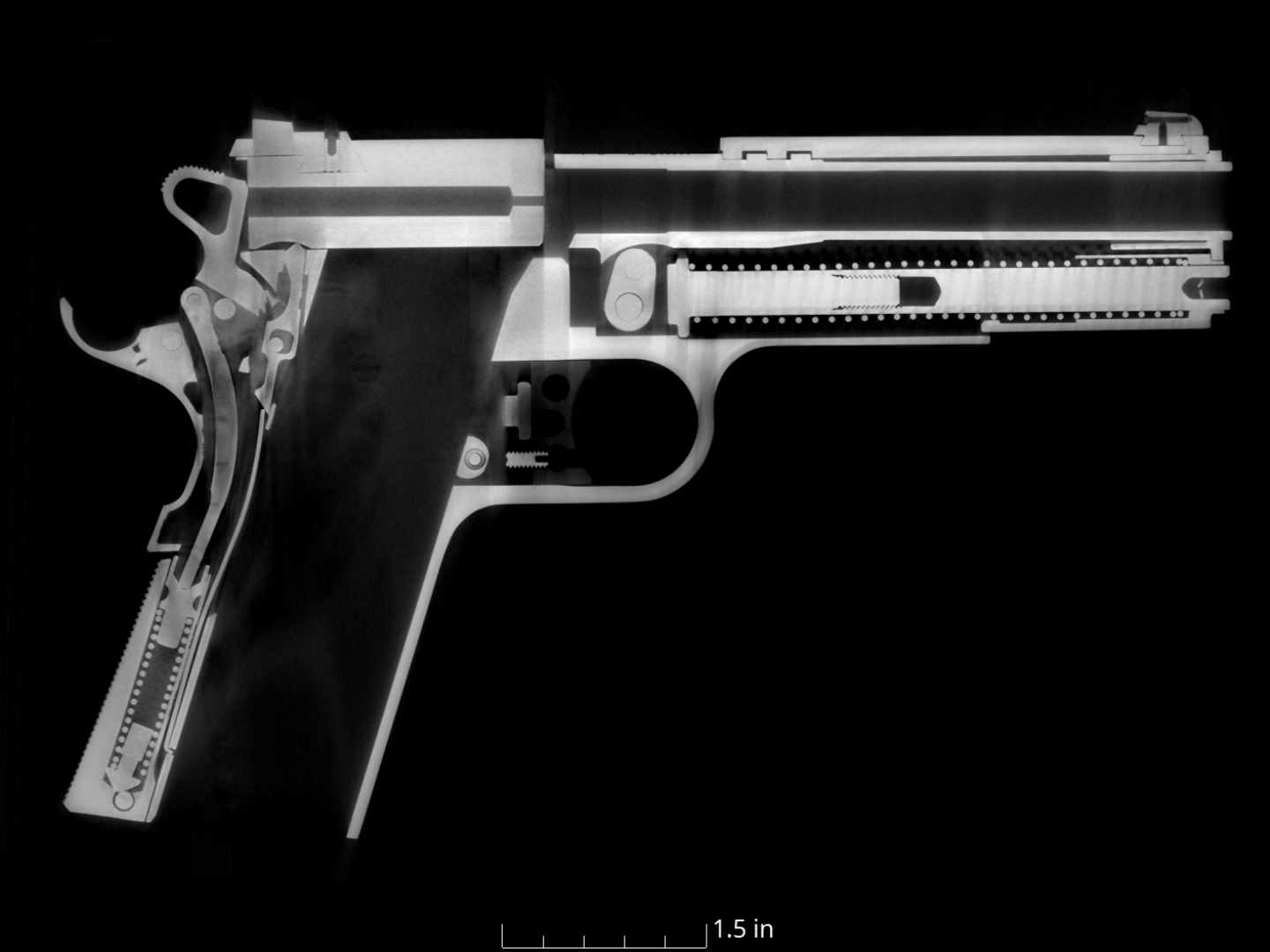
Metal Injection Molding, commonly referred to as MIM, is widely used in the production of firearm components that require complex shapes, consistent quality, and tight dimensional control. MIM can enable manufacturers to create small and complex parts that are difficult to fabricate using conventional techniques through the use of metallurgical sintering, injection molding, and tiny metal powders.
Since the components of firearms must meet high-quality and regulatory standards, internal material integrity is just as significant as the external geometry. While conventional inspection methods can confirm surface finish and external dimensions, they are limited in their ability to reveal internal conditions such as porosity, sintering defects, and hidden dimensional variation. This has made computed tomography scanning an important non-destructive inspection method for evaluating MIM firearm components.
The MIM process begins with blending fine metal powders with a thermoplastic binder to create a moldable feedstock. This feedstock is injected into a mold to produce a green portion, which is subsequently debonded to remove the binder. The last stage is sintering, during which the component is heated to enable the metals to bond and densify.
During sintering, the component experiences controlled shrinkage as density increases. When managed correctly, this process produces components with high material utilization and repeatable geometry. However, variations in powder packing, debinding, or thermal exposure can influence internal structure and dimensional outcomes, making inspection essential.
Porosity is an inherent feature of MIM materials and must be carefully controlled. In MIM gun parts porosity forms as a result of particle spacing, binder removal, and sintering behavior. Uniformly distributed porosity at controlled levels allows parts to achieve reliable mechanical performance.
Problems arise when porosity becomes excessive or uneven. Localized pore clusters can reduce structural integrity in MIM gun parts and influence long-term durability. Surface inspection cannot reveal internal pore size or distribution, which makes volumetric inspection necessary for accurate assessment.
CT scanning provides three-dimensional visibility into internal porosity without cutting the part. Engineers can evaluate pore location and distribution across critical regions and relate findings to specific process conditions.
Sinter voids are distinct from general porosity and are typically caused by localized process irregularities. These voids may result from trapped gases during debinding, uneven densification, or non-uniform temperature exposure during sintering.
In firearm components, sinter voids can act as stress concentration points. Because these defects are internal, they often go undetected using conventional inspection techniques. CT scanning allows sinter voids to be identified, measured, and located within the part volume. This information supports root cause analysis and process refinement without destructive testing.
Dimensional accuracy in MIM firearm components depends on mold design, feedstock consistency, and controlled sintering shrinkage. While MIM can achieve tight tolerances relative to part size, internal features, and enclosed geometries present inspection challenges.
Traditional coordinate measuring machines are effective for external features, but cannot access internal geometry. CT scanning can scan both the internal and external surfaces in a single scan and compare them fully dimensionally to nominal CAD models. This enables verification of internal cavities, wall thickness, and geometric relationships that cannot be measured externally.
One of the key advantages of CT inspection is the ability to evaluate several quality characteristics at the same time. A single scan can provide insight into internal porosity, detect sinter voids, and verify dimensional accuracy across the entire component.
This single process will decrease dependence on destructive sectioning and minimize numerous inspection arrangements. It is especially effective when examining the first article, validating processes, and quality control.
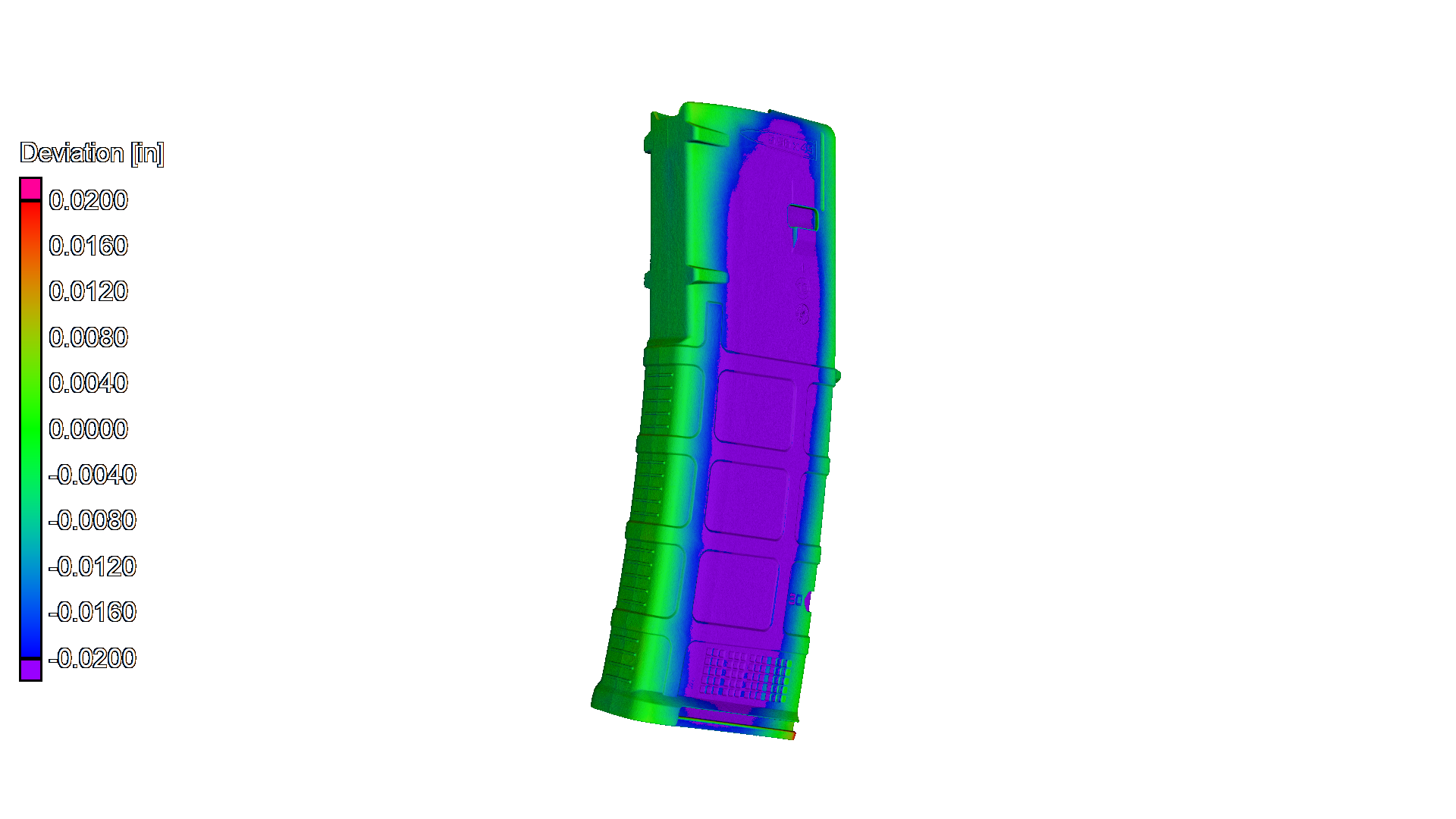
CT scanning complements traditional metallurgical testing and dimensional inspection by providing non-destructive insight into internal structure. For regulated manufacturing environments, CT data supports traceable documentation, repeatable inspection workflows, and early detection of process variation.
At Nel Pretech, CT inspection is applied within controlled, accredited workflows designed to support quality assurance and engineering validation for complex manufactured components. By combining volumetric imaging with established metrology and materials evaluation practices, internal conditions such as porosity distribution, sinter voids, and geometric compliance can be assessed without compromising part integrity.
As MIM is being applied to more complex firearm parts, inspection procedures must provide reliable and comprehensive data. CT scanning allows producers to analyze porosity, sintering quality, and dimensional accuracy in a single inspection step, resulting in more informed quality choices, process stability, and lower production risk throughout the product's lifespan.
Contact Nel PreTech for firearm component inspection.

Carter Aldridge is a youthful injection to the Nel Pretech team, bringing a can-do attitude, infectious curiosity, and an out-of-the-box thought process. Carter is one of Nel Pretech’s CT specialists and a Sr. Applications Engineer.


You'll find all the detailed service information you need in one brochure.
Download Brochure
Get a quote within 24-hours and keep your project on schedule.
Get a Quote
Our Nel PreTech engineers are ready to get started on your product challenges.
Ask an Engineer
Download the ultimate CT Scanning Buyer's Guide to improve understanding, time, and efficiency in your scanning needs. Over 50 Pages of useful data and case studies.
Download Now